Project Overview
Background InformationThis project was a collaboration between my 3rd year dissertation project along my duties as the powertrain system lead for the MMU FS team.
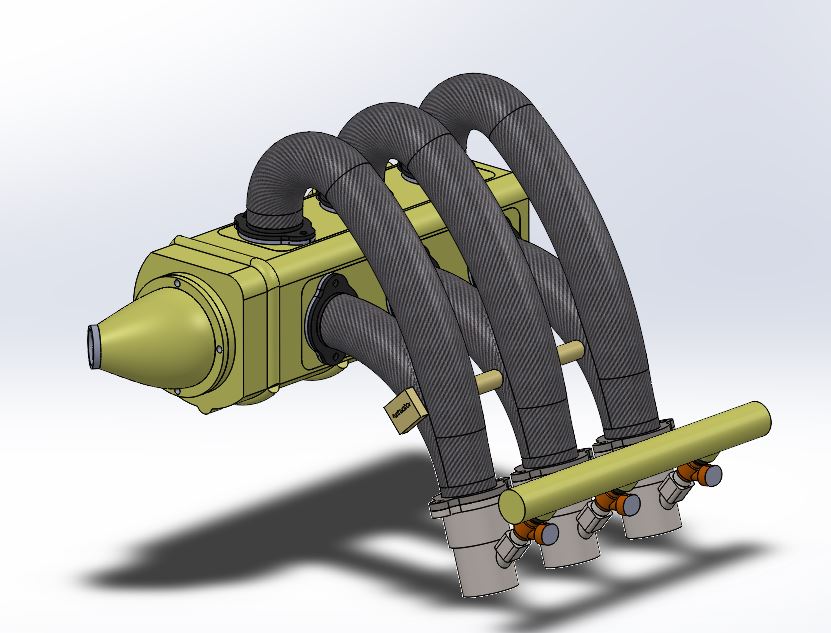
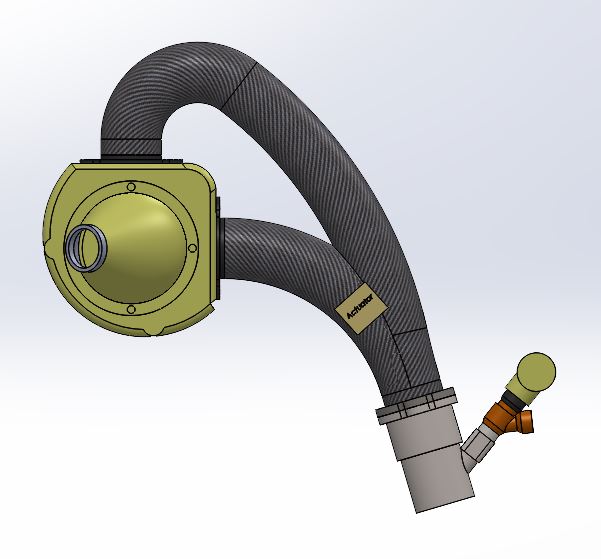
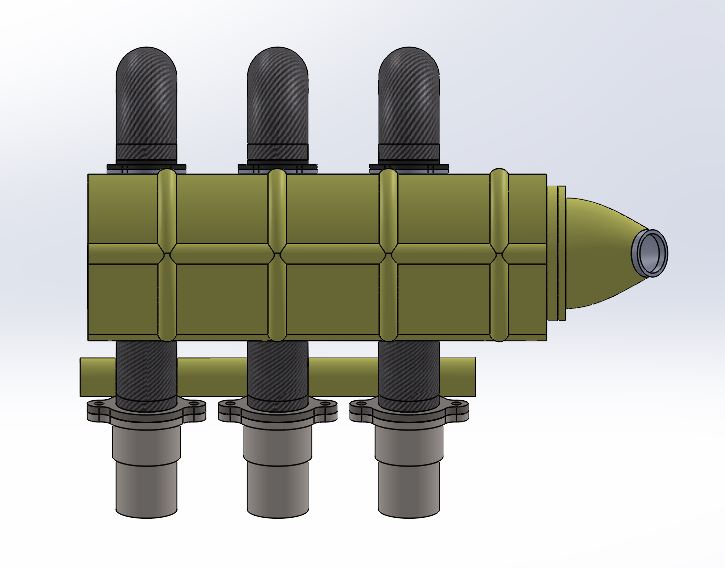
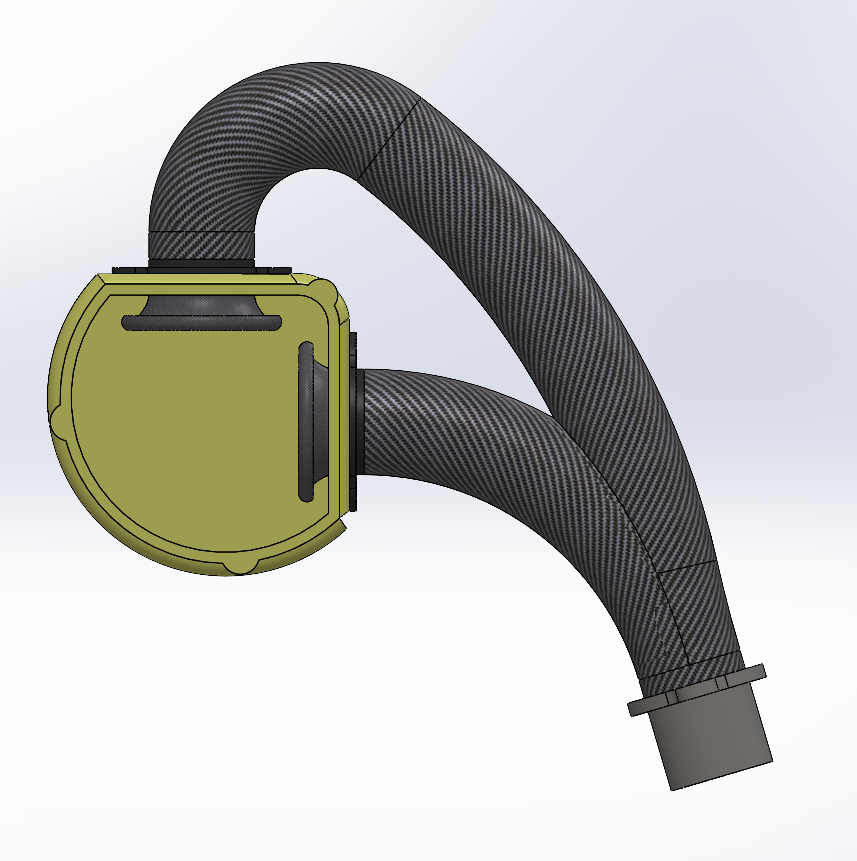
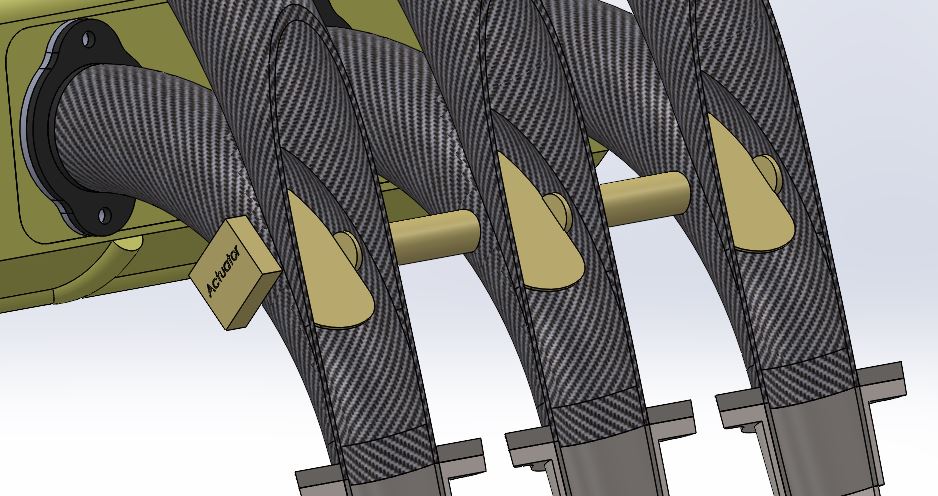
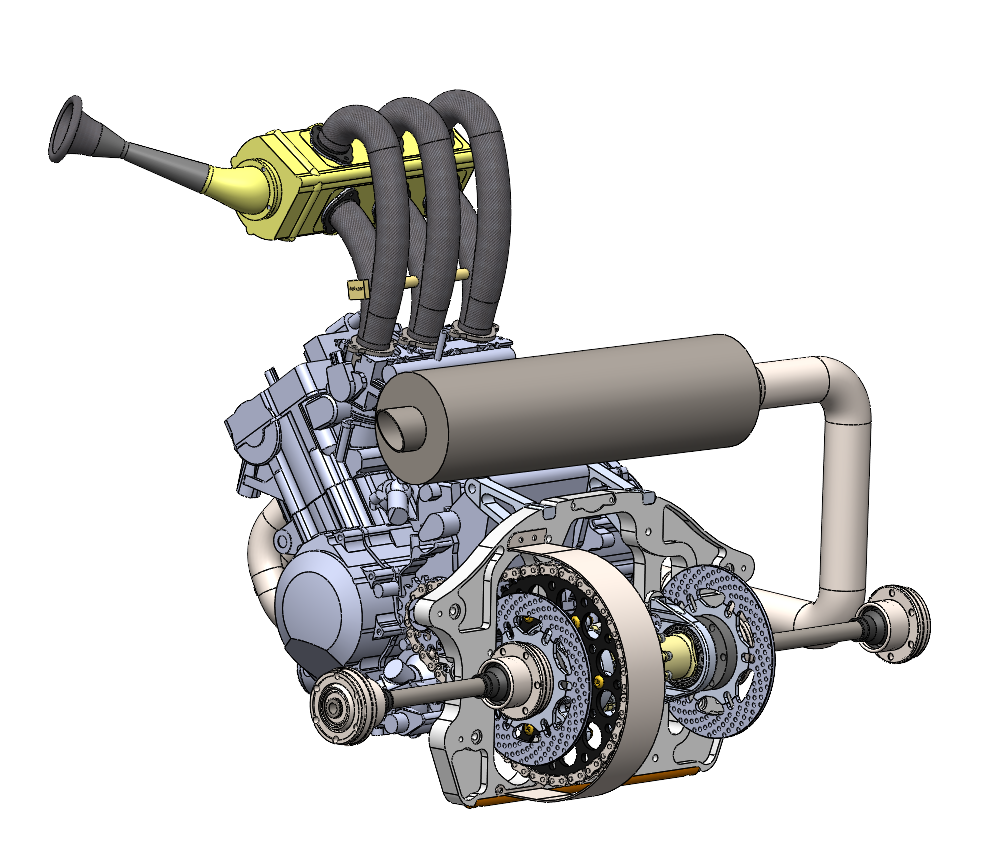
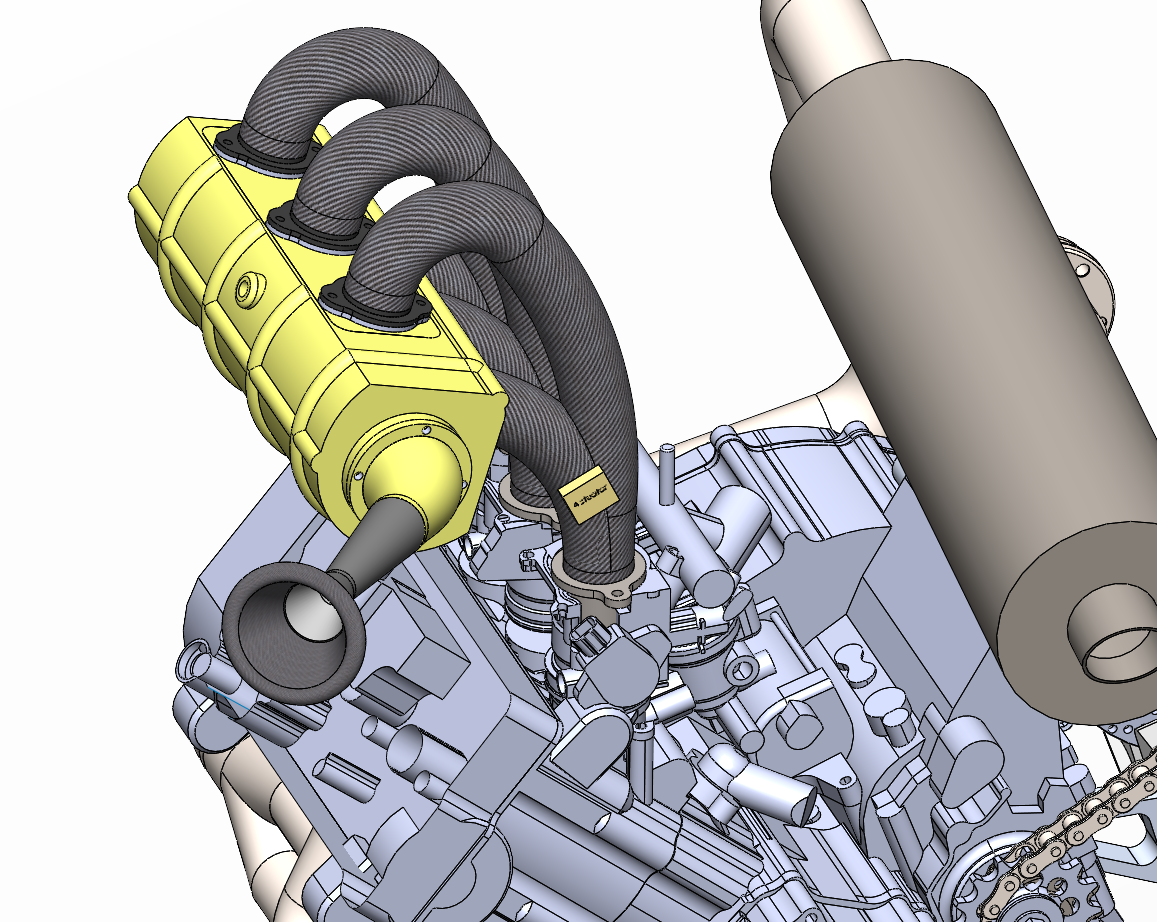
Project Aim:This project aimed to design an intake system with variably adjusted runner lengths that modulate into two different modes depending on the engine's operating RPM. With the perfect design, this would provide a ram air supercharging effect, causing a higher engine volumetric efficiency (%), which would increase overall horsepower and torque output across most engines' operating RPMs, which makes driving the car easier and not constrained to maintain a specific tight-end RPM range.
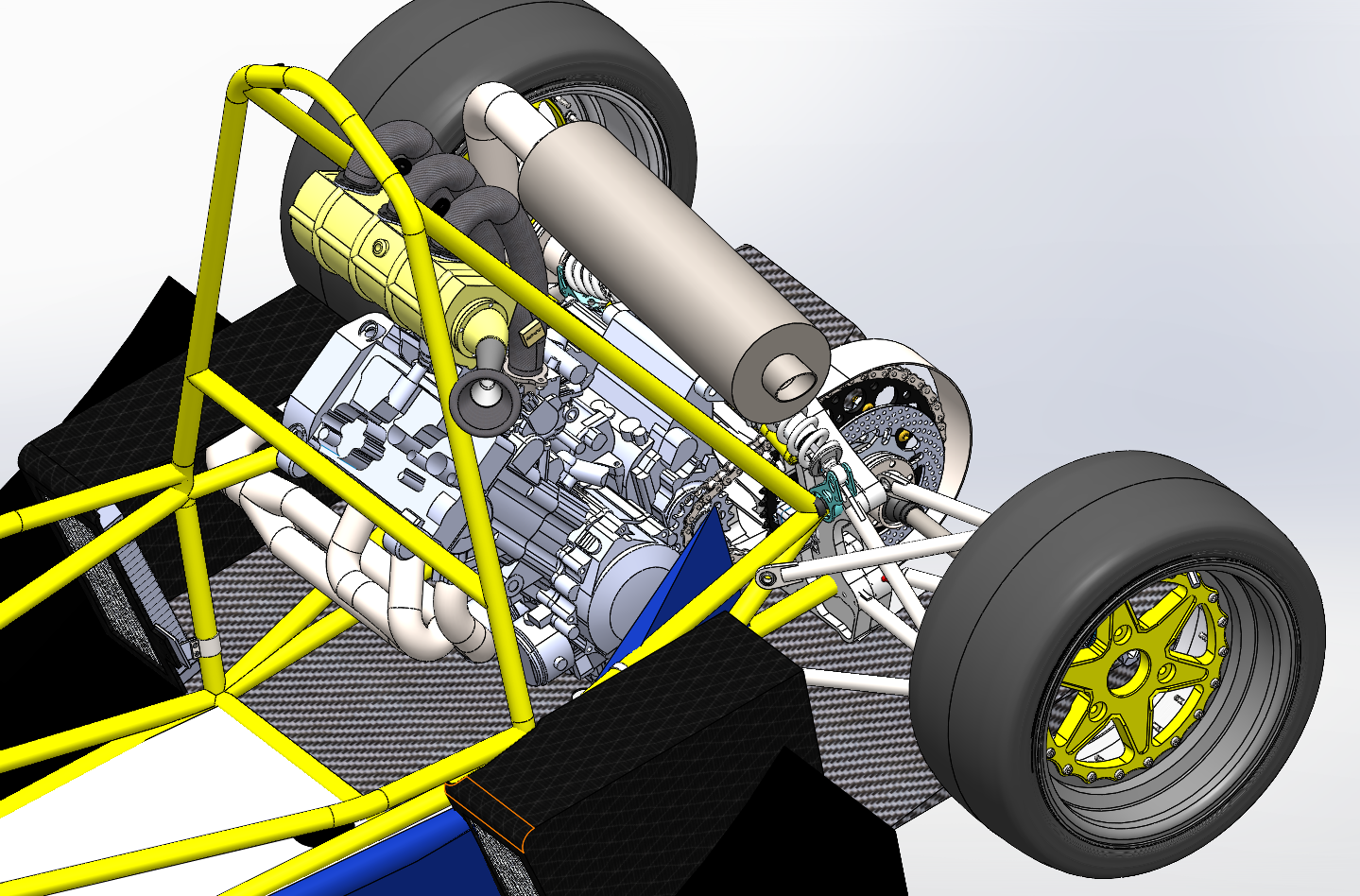
Working my way through the competition regulations, I was required to work within a set of constraints; however, I came up with an innovative solution that would give our team the competitive edge during the dynamic competition.
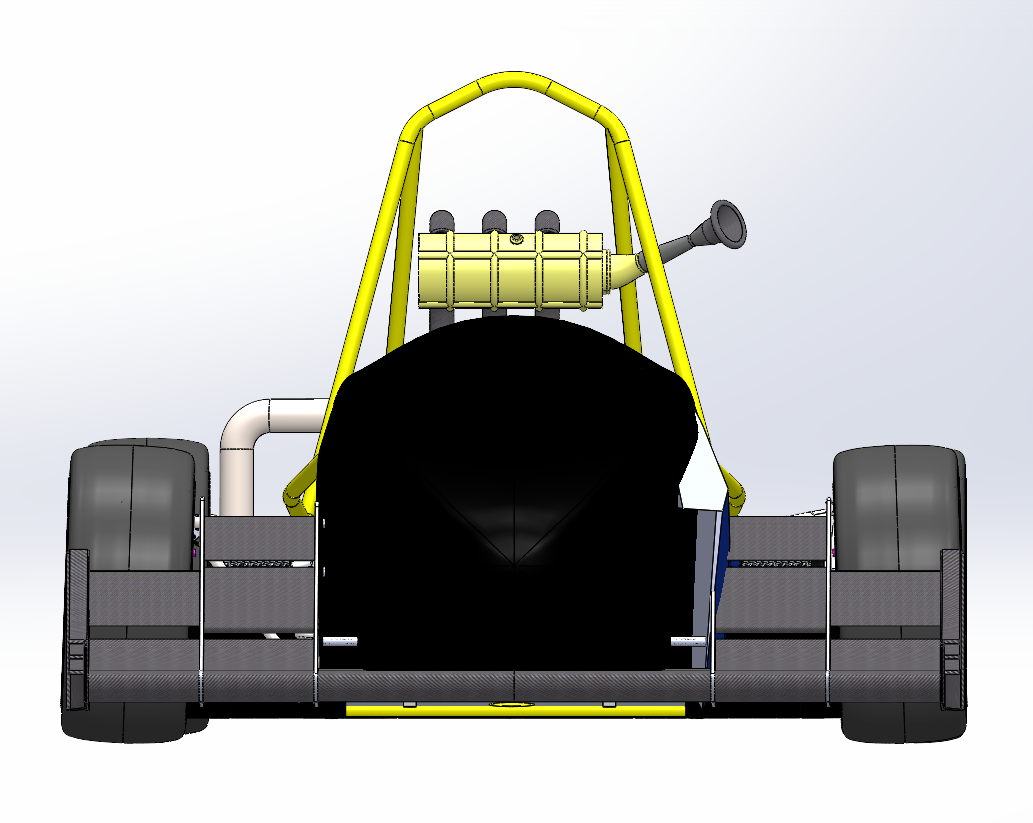
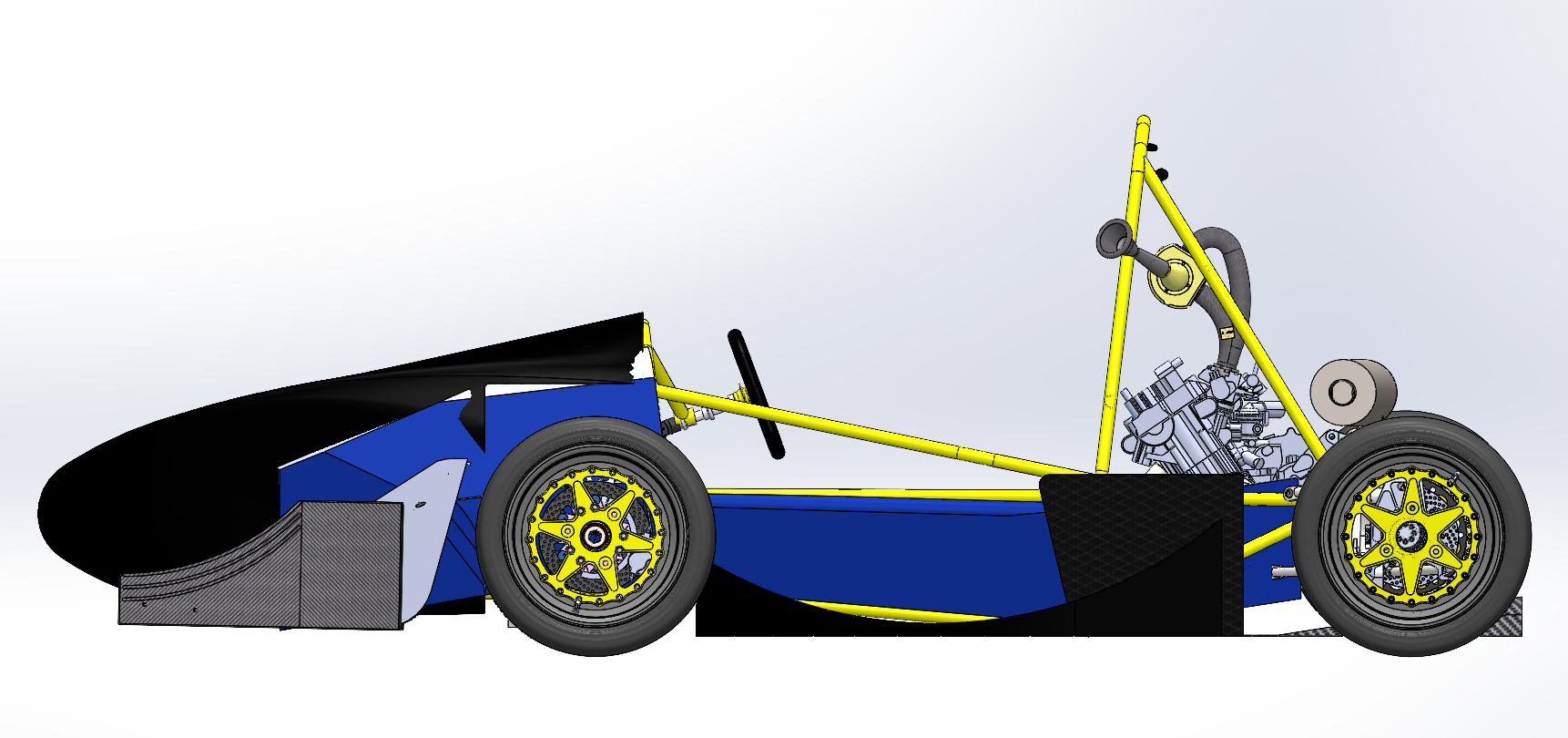
In addition, I've also created a fixed runner length intake system, which is optimized to produce the maximum level of airflow through an FS demanded restrictor tailored to the required driving RPM. The intake system was designed, simulated through FEA and CFD, and finally fabricated using 3D printing - (Markforged X Onyx material). Seen below, the system was installed on the FS 2023/24 car, which was competing in Silverstone.
Formula Student Competition
Formula Student is Europe's most established educational engineering competition, backed by industry and top universities. Teams of university students design, build, test, and race a small-scale formula-style racing car in a competition against over 100 teams from universities across the globe.
Key Performance Areas
Technical Contributions
My role encompassed multiple aspects of vehicle development:
- Component design and CAD modeling using SolidWorks for various vehicle systems
- Structural analysis and validation using Finite Element Analysis (FEA) to ensure safety and performance
- Aerodynamic analysis and optimization using Computational Fluid Dynamics (CFD) simulation
- Vehicle dynamics analysis to optimize suspension geometry and handling characteristics
- Collaboration with composite materials team for lightweight structural components
- Participation in manufacturing and assembly processes
- Testing and validation of vehicle systems at track testing sessions
Engineering Challenges
Weight Optimization:
Balancing structural integrity with weight reduction was critical. Used advanced materials including carbon fiber composites and lightweight alloys, coupled with topology optimization to minimize weight while maintaining safety factors.
Aerodynamic Efficiency:
Developed aerodynamic packages to maximize downforce while minimizing drag. CFD simulations guided design iterations, validated through track testing to correlate simulation with real-world performance.
Manufacturing Constraints:
Designed components considering available manufacturing capabilities and budget constraints. Required creative problem-solving to achieve performance targets within limitations.
Competition Events
Formula Student competitions evaluate vehicles across multiple categories:
- Static Events: Engineering design presentation, cost analysis, and business presentation
- Dynamic Events: Acceleration, skid pad, autocross, endurance, and efficiency tests
- Safety Scrutineering: Comprehensive technical inspection ensuring rules compliance
This comprehensive evaluation mirrors real automotive development, requiring excellence in both engineering and presentation.
Project Photos